Posts

TRADE IN USED CLOTHES IS A MEANS OF EMPLOYMENT

Image
 STORY BY: SALAMATU ADISS Many will say the trade in used clothes or as many Ghanaians call it obroni wawu is a means of employment, this trade is where they get their income to pay bills and feed their families. Even though the trade in used clothes may provide employment opportunities it does not change the fact that it has a major impact on the climate. When clothes are bought and discard at a rapid speed it contributes to the production and disposal of textiles which leads to air pollution caused by the factories that make this textiles, water pollution also caused by the factories and also from transporting this clothes by sea. The production of new clothes to meet the demand for fast fashion further worsens the environmental impact of fashion industry. Sustainable fashion practices such as reducing, reusing and recycling clothes can help reduce the impact fast fashion has on the climate. By doing that, we can help reduce the impact of fast fashion on the environment whi...
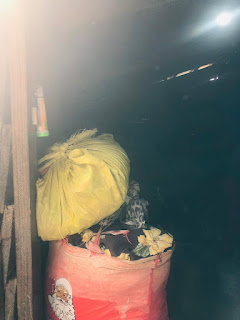
Textile Industry Drastic Effect On Climate Change

STORY BY: Miss Clare Asewe Kaba  The textile industries are major contributors to global warming with 1.7 million tons of carbon dioxide emitted annually, accounting for 10% of global greenhouse gas emissions. In an interview with the CEO for the Prim and Proper Clothing Industry, Mr. Enock Nyarko made mention that clothes production uses a lot of natural resources and creates greenhouse gas emissions which are responsible for climate change. He as well mentioned in his speech that, overall, the fashion industries are responsible for 8-10% of global emissions according to the UN. A second-hand cloth dealer at the Kantamanto market, Accra Ghana, expressed her displeasure at the disposal of unwanted and disregarded fabrics. According to her, clothes take longer time to decompose, hence, must be disposed at appropriate places or better still, be burnt. Manufacturing industries produce emissions, mostly from burning fuels to produce energy for making products such as cement, iron, stee...

CLIMATE CHANGE;OUR BIGGEST PROBLEM

Image
Story by ; Isaac Osei   To begin climate change is a making global issue that demands our attention. While discussions often focus on industries and transportation, the impact of clothing on climate change is often overview . The fashion industry, in particular, plays a significant role in contributing to greenhouse gas emissions and environmental degradation. This article based to shed way  on the connection between clothing and climate change, emphasizing the need for sustainable fashion practices. The production of clothing involves various processes that lead to climate change. From the cultivation of raw materials to manufacturing, and disposal, each step has a carbon effect . The textile industry heavily relies on energy-intensive processes, such as dyeing and finishing, which consume vast amounts of water and release greenhouse gases. Additionally, the use of synthetic fibers, which are derived from fossil fuels, further exacerbates carbon emissions. The disposal of clo...

EFFECTS OF DISPOSITION OF CLOTHES

Image
 STORY BY: Nketia Benedicta Asabea          Clothes disposal has become a part and parcel of life of many people. Most people deem it as their second choice immediately when their clothes are too tight for them, too big for them, when a button or a zip removes from it, and the sad part is when they feel they have worn a particular clothe for a very long and for that matter needs to be thrown away and refill it. This decision of theirs in one way or the other destroys the atmosphere and our surroundings which many do not have any idea about.      Clothes disposal negates sustainability in the environment. To sustain means to keep going or support it over time. It's like preserving something so it can continue to exist. But by discarding clothes, we get deprived of the opportunities to reduce, reuse it for other stuff or even recycling it into different sizes and shapes thereby undermining sustainable practices. Microplastics are caused by disp...

Dead White Man's Clothes/ Obroni Wawu

Image
 STORY BY; Joyce Aopare  The environmental distaster fueled by used clothes and fast fashion is insane. While the trade in used clothes has created Thousands of jobs it is also turning parts of Ghana into toxic landfill  The tentacles are creating an environmental catastrophe of unthinkable proportions. Alleys full of unusable clothing are swept up and bundled into sacks. Textile waste dump at Old Fadama; Accra is an eye saw, nothing to write home about. "This place is serving as a dumping ground for textile waste in the name of second _hand clothing, the world's unwanted fashion" _stated the caretaker of the landfill. Close to 40% of whatever shipment is coming on a daily basis ends us to be complete chaff of no value. A truck is filled to over with roughly 6 million garments every week that leave Kantamanto market as waste ,a huge portion of all that clothing is trucked two hours North Accra and ends up being dump as landfill. The pressure from the used clothing in...

FASHION DESIGNERS URGED TO PRACTICE SUSTAINABLE FASHION

 Story by : Jennifer Mensah A climate activist and fashion designer Kimberly Rebecca  Dzifa has emphasized on the need to switch to sustainable fast fashion to save the climate   According to her, regulations must be enforced to control how much clothes must be produced and the fashion designers should be made to state the lifeline of each outfit they produce. Dzifa, further explained fast fashion as the use of textiles to produce cheap clothes in excesses; she therefore termed fast fashion as “thrift”. “To ensure sustainable fast fashion, fashion designers must use durable textiles to produce expensive and long lasting clothes so that consumers will not purchase and discard after a short period of time,” Dzifa said. She again stressed on practicing clothe swap, reusing and recycling of used and unwanted clothes into other useful things instead of throwing them away into landfills and other places in the environment. In an interview with some women in Accra Kantamanto mar...

AN OVERVIEW OF CLIMATE CHANGE AND CLOTHING

Image
 Climate change and clothing are interconnected in several ways. The fashion industry has a significant impact on the environment, contributing to climate change through various stages of production, distribution, and disposal. The production of clothing involves the extraction of raw materials, such as cotton or synthetic fibers, which can have significant environmental consequences. For example, conventional cotton farming often requires large amounts of water, pesticides, and fertilizers, contributing to water pollution and soil degradation. Additionally, the manufacturing process emits greenhouse gases and other pollutants.    The transportation and distribution of clothing also contribute to carbon emissions. Many garments are produced in one part of the world and then                          shipped to different countries for sale, resulting in increased fossil fuel consumption and emissions. Again, ...